The Real Problem With Modern Fitness
Most adults approach fitness as something they have to do, not something they live inside.
A workout is an event.
A practice is an identity.
Workouts come and go.
Practices compound.
This is the fundamental difference between people who stay fit for life and people who struggle for decades.
The Cost of “Workout-Only” Thinking
1. Inconsistency
When motivation drops — and it always does — workouts stop.
A practice doesn’t rely on motivation. It relies on rhythm.
2. No Skill Development
Lifting weights improves strength, but not necessarily coordination, timing, or awareness — the things adults lose fastest.
3. Burnout
Workouts demand intensity. Adults with jobs, stress, and limited recovery capacity cannot sustain that approach long-term.
What a Practice Actually Is
A practice is a loop:
Move → Breathe → Reset → Repeat
It’s designed to be sustainable, adaptable, and regenerative rather than draining.
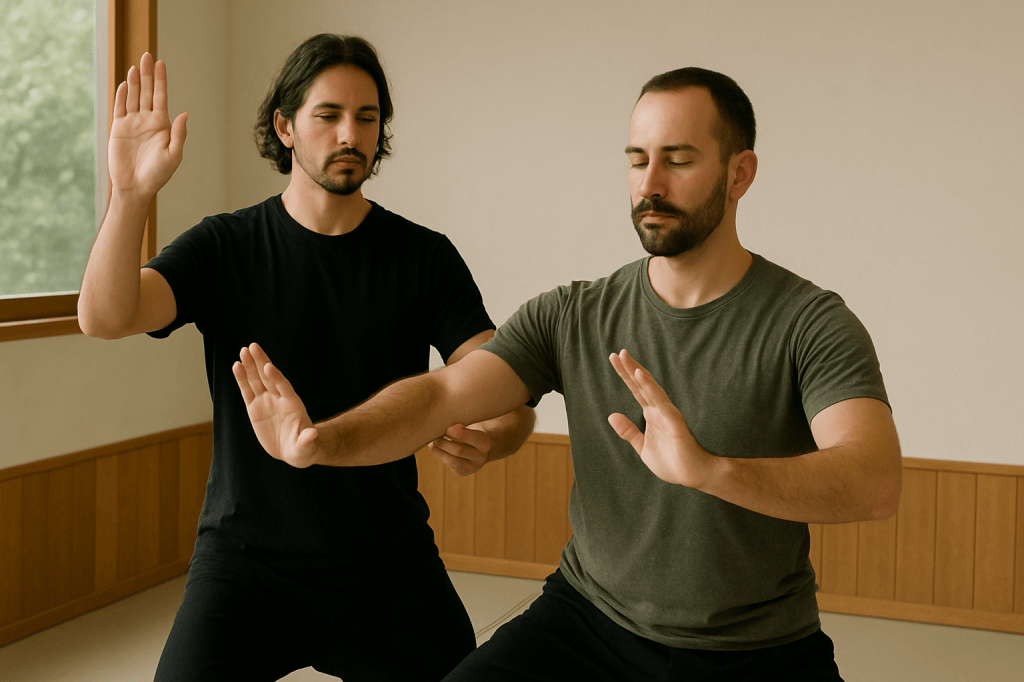
Movement
Strength, mobility, balance, martial arts-inspired drills.
Low impact. High value. Joint-friendly.
Breath Work
Breathing restores the nervous system, improves recovery, and stabilises posture. It is the missing ingredient in nearly every adult fitness routine.
Mindful Reset
A short pause. A moment of awareness.
This builds discipline, reduces stress, and anchors long-term change.
Key Advantages of a Practice Model
1. Sustainable Progress
Because a practice is rhythm-based rather than intensity-based, it avoids the boom-and-bust cycle many adults fall into. Progress becomes steady instead of sporadic.
2. Better Joint Health
Practice-lead training emphasises control, range, and posture instead of chasing maximum output. This approach reduces joint irritation and improves long-term movement quality.
3. Nervous System Regulation
Repeating movement and breath patterns lowers tension, improves breathing mechanics, and helps the body shift away from chronic stress responses. This is something most workout-only programs overlook entirely.
4. Identity Formation
The routine of showing up for a practice gradually reshapes self-image. Adults often begin to see themselves as capable, consistent, and disciplined — which reinforces long-term adherence.
Who Benefits Most From This Approach
- Adults returning to exercise after a long break
- Individuals over 40 wanting longevity without excessive strain
- People managing stress, stiffness, or reduced mobility
- Anyone who prefers structured, restorative training over high-intensity sessions
The Core Idea
A workout can improve your day.
A practice can change your trajectory.
The long-term sustainability of a practice model makes it uniquely suited for adults who want strength, mobility, and resilience without the cost of burnout or injury.


 DojoPrana Mind and Body
Leave a comment